
The Bone Caves of Inchnadamph
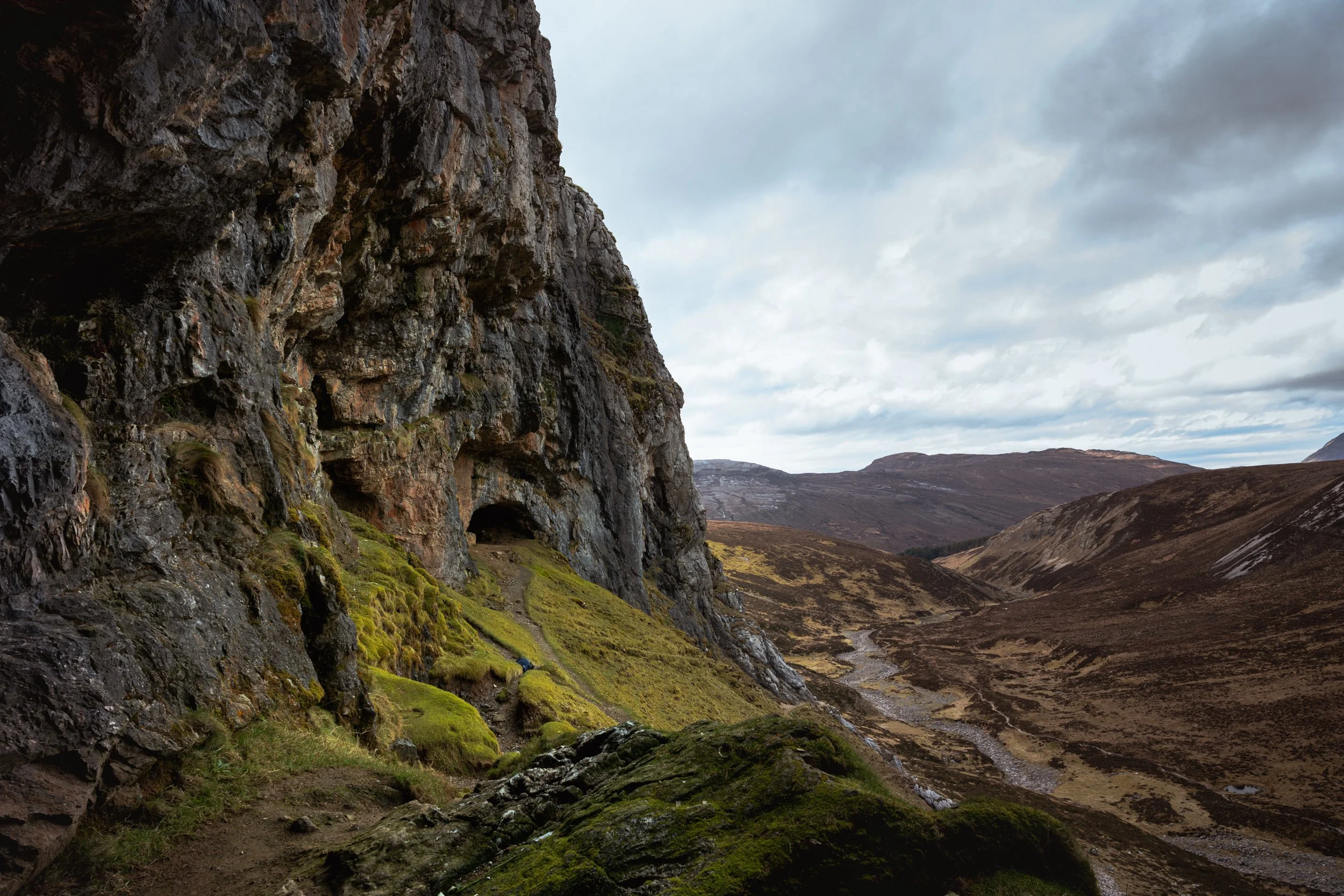
I was ushered into the canyon by a fierce westerly wind.
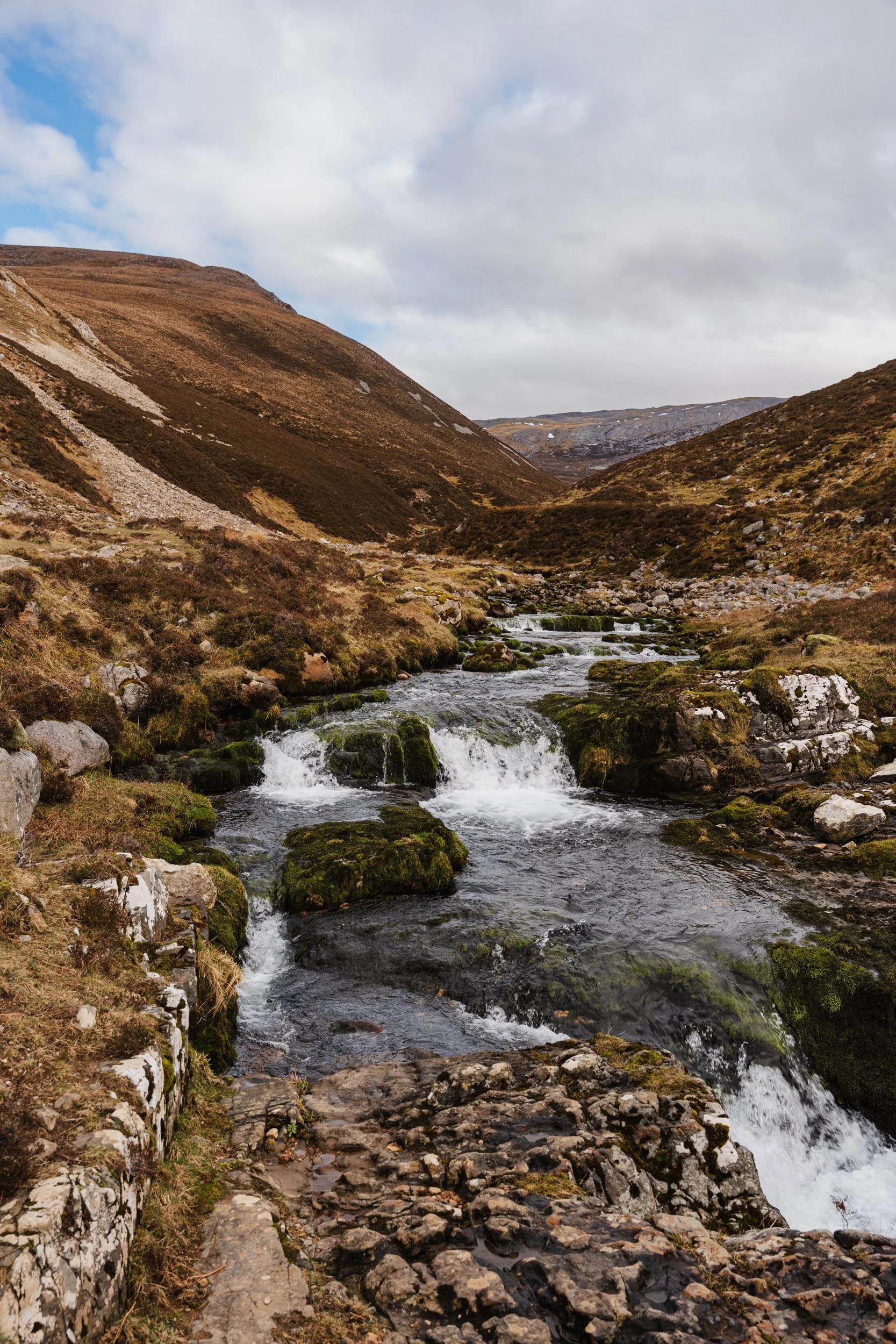
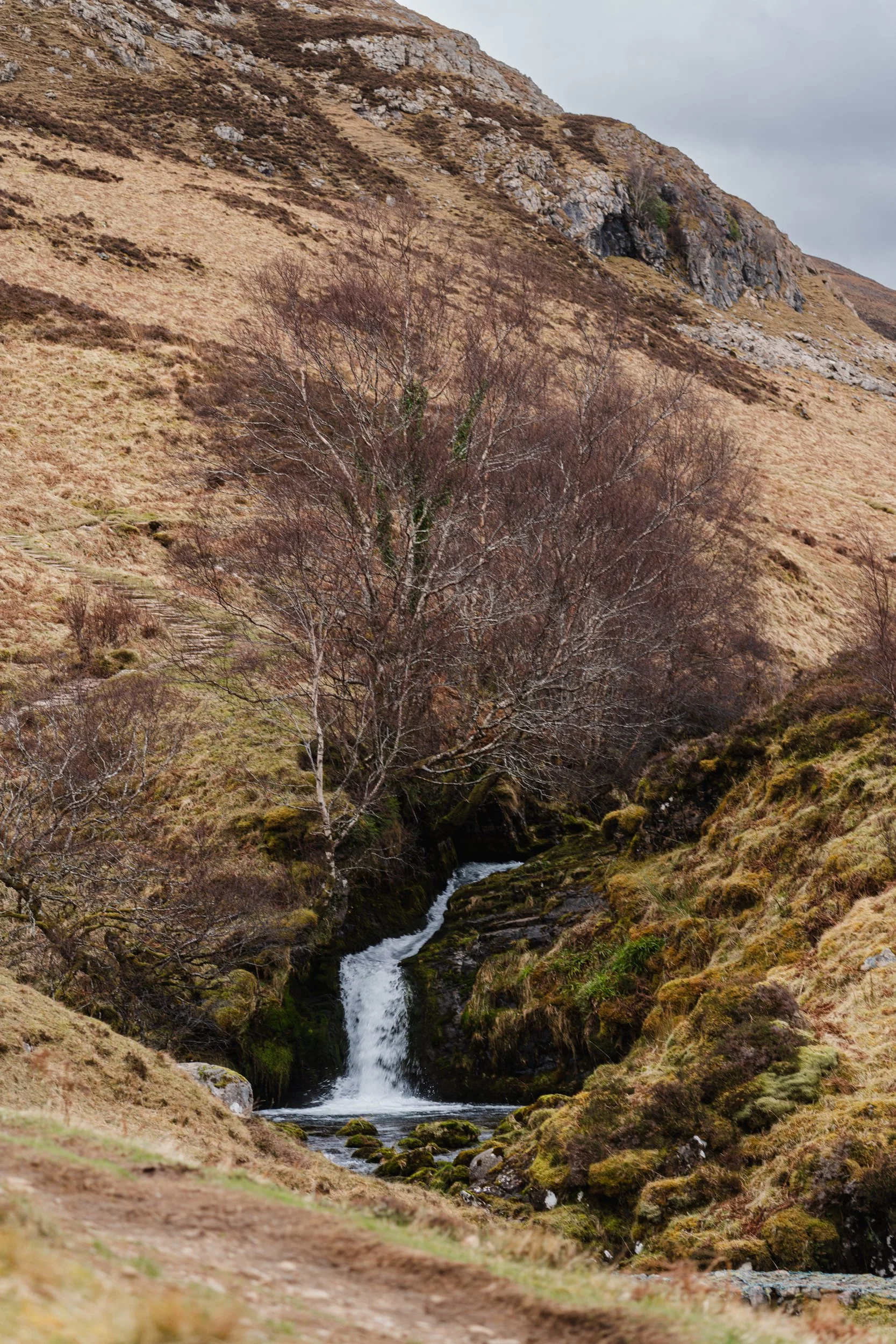
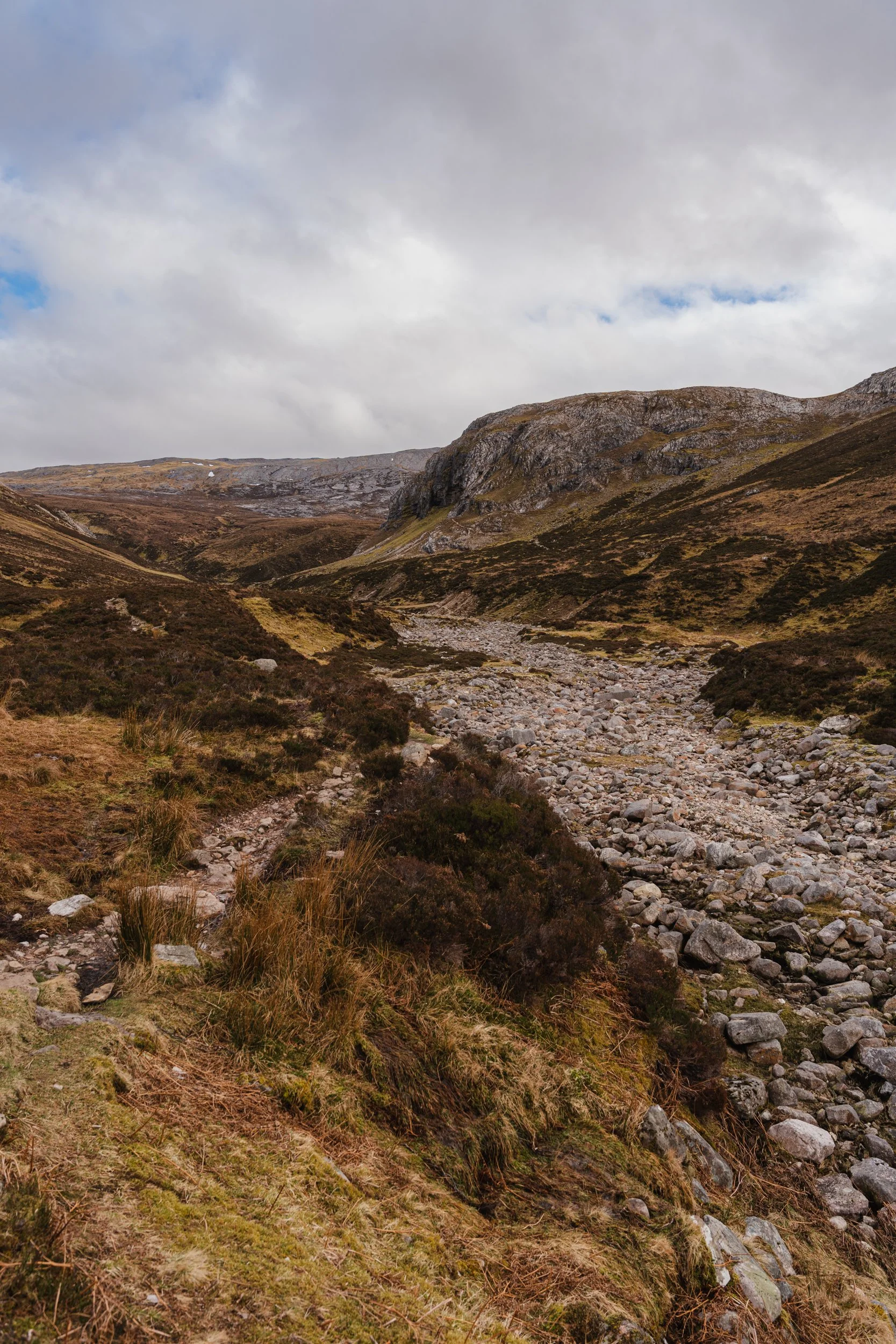
I’d been following a steady river along the basin when the water was suddenly gone, and all that lay ahead was a dry rock bed. I didn’t know it at the time, but this vanishing river phenomenon occurs in karst landscapes, characterized by ancient limestone geology, which forces water to flow through underground tunnels. It’s one of many elements that make this landscape mysterious - certainly appreciated by the locals, but pure magic to newcomers experiencing it for the first time.
Cut into the limestone of Creag nan Uamh, the Bone Caves first introduce themselves as black eyelets 200ft up into the rock wall. After scrambling up the crag and walking into the first, there’s no major spectacle or show. Just dark space and cave drips, oddly resonant of a clock keeping time. Tick, tock. Drip, drop. This cave is infinitely more intimate with time than we ourselves could ever be.
In the late 1800’s, geologists Peach and Horne excavated a variety of bones from these caves, hence the name. In later years, more discoveries were made. Among humans bones were the Arctic fox. A 20,000 year-old skull of a Polar Bear. Lynx. Wolves. These animals no longer belong to this landscape, but they once did. And that fact alone makes the cavern feel more expansive, despite being small in size.
Standing in the cave, it’s difficult to hold the present steady. The ground feels absolute, firm, unchangeable, but these hills were carved, and these caves were cut. We are a blip on the radar of this landscape’s timeline.
Some of the writers I’ve been researching for my dissertation return to places like this to reconstruct the past, to work against the assumption that what we see now is all there has ever been.
The caves keep their secrets close, but they carve deep impressions upon the wandering mind.
